





Partnership in business is essential – but also highly responsible.
It’s not something to rush into. And if you do enter a partnership, it’s crucial to do it consciously, discussing and documenting all terms in advance.
This document outlines a methodology that significantly reduces the risk of an unsuccessful partnership. The methodology is based on David Gage’s book “The Partnership Charter,” but filtered through my own experience, expanded, and adapted to our current realities.
I should clarify upfront: if you try to apply this methodology on your own, there is a high chance you will cut corners or overlook important issues.
That’s exactly what happened to me when my partner and I went through this process ourselves. I was already emotionally invested in the idea, we had begun executing it, and even though we identified several uncomfortable points while drafting the agreement, we ignored them. Some things we addressed only superficially. The goal was to “agree faster and get to work,” not to dive deep into potential risks.
It’s not something to rush into. And if you do enter a partnership, it’s crucial to do it consciously, discussing and documenting all terms in advance.
This document outlines a methodology that significantly reduces the risk of an unsuccessful partnership. The methodology is based on David Gage’s book “The Partnership Charter,” but filtered through my own experience, expanded, and adapted to our current realities.
I should clarify upfront: if you try to apply this methodology on your own, there is a high chance you will cut corners or overlook important issues.
That’s exactly what happened to me when my partner and I went through this process ourselves. I was already emotionally invested in the idea, we had begun executing it, and even though we identified several uncomfortable points while drafting the agreement, we ignored them. Some things we addressed only superficially. The goal was to “agree faster and get to work,” not to dive deep into potential risks.

Three years later, all those unresolved issues resurfaced, and we had to part ways.
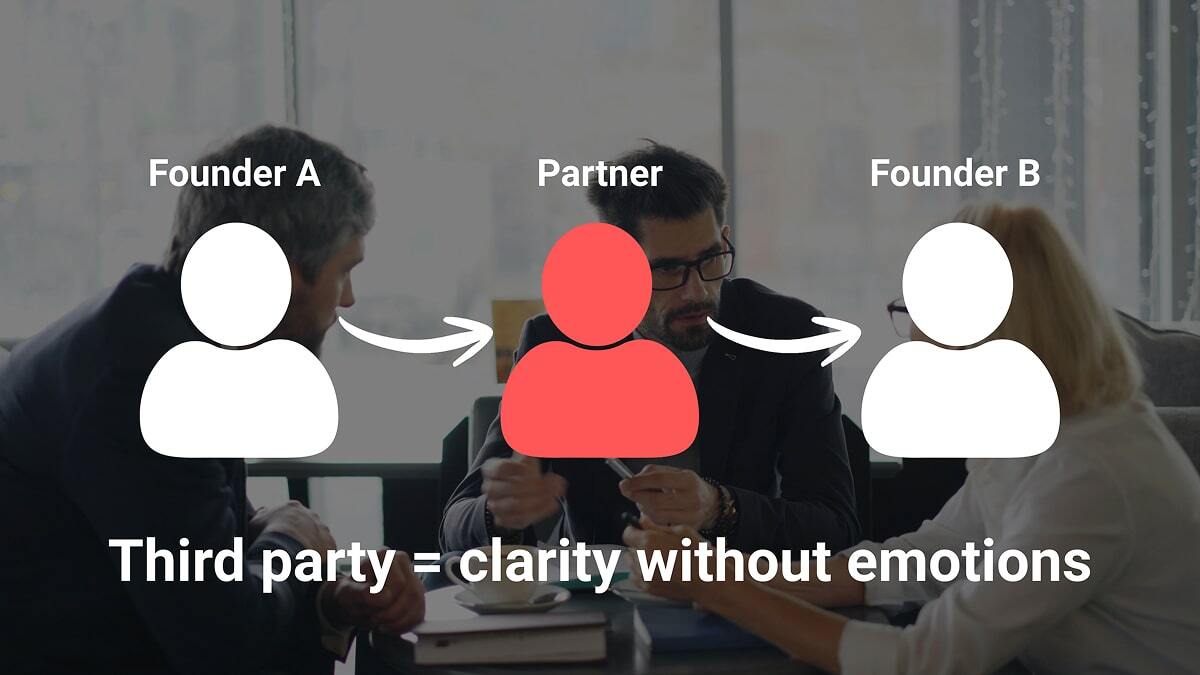
That’s why I believe it’s far better to involve a third party. Someone who is not emotionally involved, who won’t allow you to smooth over the difficult parts, and who will ensure the agreement is fully thought through.
That’s why I believe it’s far better to involve a third party. Someone who is not emotionally involved, who won’t allow you to smooth over the difficult parts, and who will ensure the agreement is fully thought through.
One more important note:
Here we are not discussing the legal structure of a partnership agreement, but its practical, real-life foundation – the things that co-founders must agree on before starting. All of this, of course, can later be incorporated into a legal document.
Here we are not discussing the legal structure of a partnership agreement, but its practical, real-life foundation – the things that co-founders must agree on before starting. All of this, of course, can later be incorporated into a legal document.
A few more important considerations:
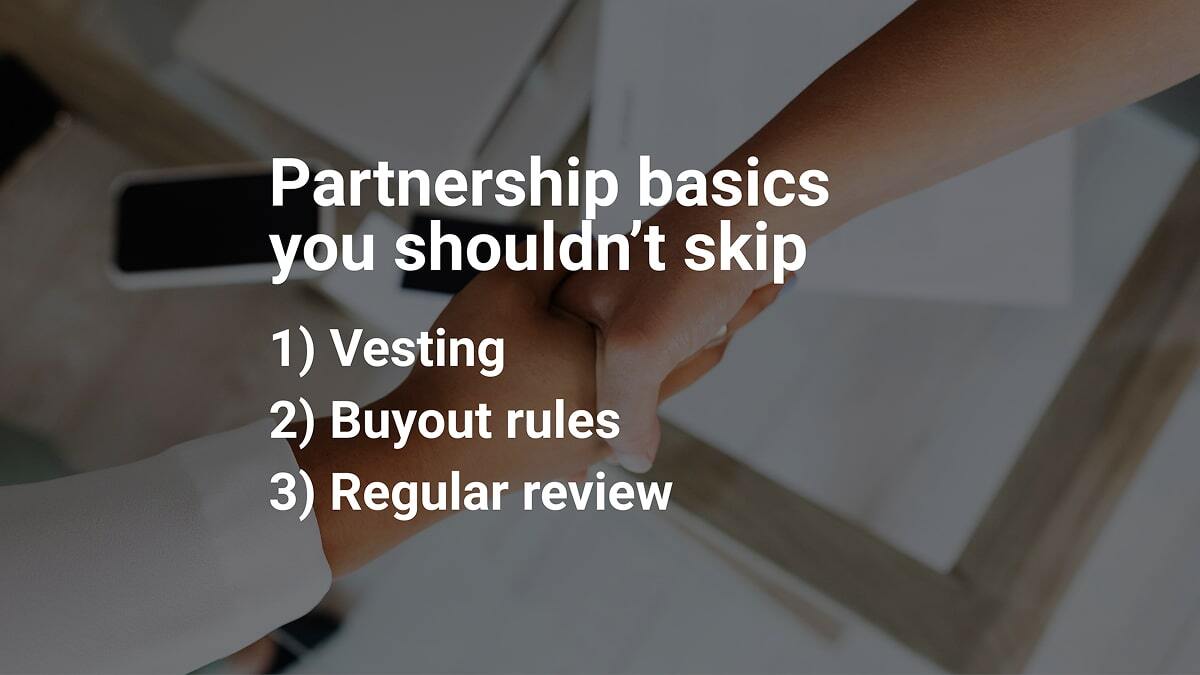
Define the valuation and the buyout process in advance, in case a founder exits, especially prematurely.
- It’s useful to repeat this process regularly – for example, once a year before a strategic planning session.
- At the beginning, it’s wise to include vesting, ideally for 3-4 years. Otherwise, if one founder leaves early, the remaining team members lose motivation.
Define the valuation and the buyout process in advance, in case a founder exits, especially prematurely.
And for those who love practical tools, there is also a questionnaire that helps estimate equity distribution – Co-Founder Equity Calculator.