






Today I want to talk about the team as the foundation of building a successful business. I like turning everything into processes, but this area is still the least formalized. So here is a set of thoughts, techniques, and principles that I have developed for myself.

In the overwhelming majority of cases, the team is the reason for success or for not achieving goals. Everyone says this, but you only understand it when you go through conscious management of this parameter yourself and see the results.
Founders regularly complain that there are no good people on the market. I consider this a victim mindset. Most often, the problem lies in the entrepreneur.
You can always build a team. It takes a lot of time. But you need to understand that this is one of the founder’s most important tasks. And this is exactly the case when garbage in, garbage out.
Hiring people is expensive! And hiring the wrong people is very expensive! That’s why you need a clear understanding of what exactly the employee will physically do, what benefit the business will receive from this hire, ideally expressed in money. For this, it’s useful to have a dashboard showing revenue and/or profit per employee. Hiring based on the principle “because everyone else has it” or “we’ll figure it out later” is unacceptable.

But there is the opposite situation. There is a category of entrepreneurs who are afraid to hire people. Afraid that their business might be stolen. I had one acquaintance like that. You cannot build a business from this paradigm. A business, not self-employment.
Invest time in describing the profile. Not with a template. Start with a blank page, imagining in detail what the person will be doing in the company. Be ready to explain every point and every word in this description. There should be no copy-pasted job postings. If you don’t know, you won’t be able to integrate a person into your system.
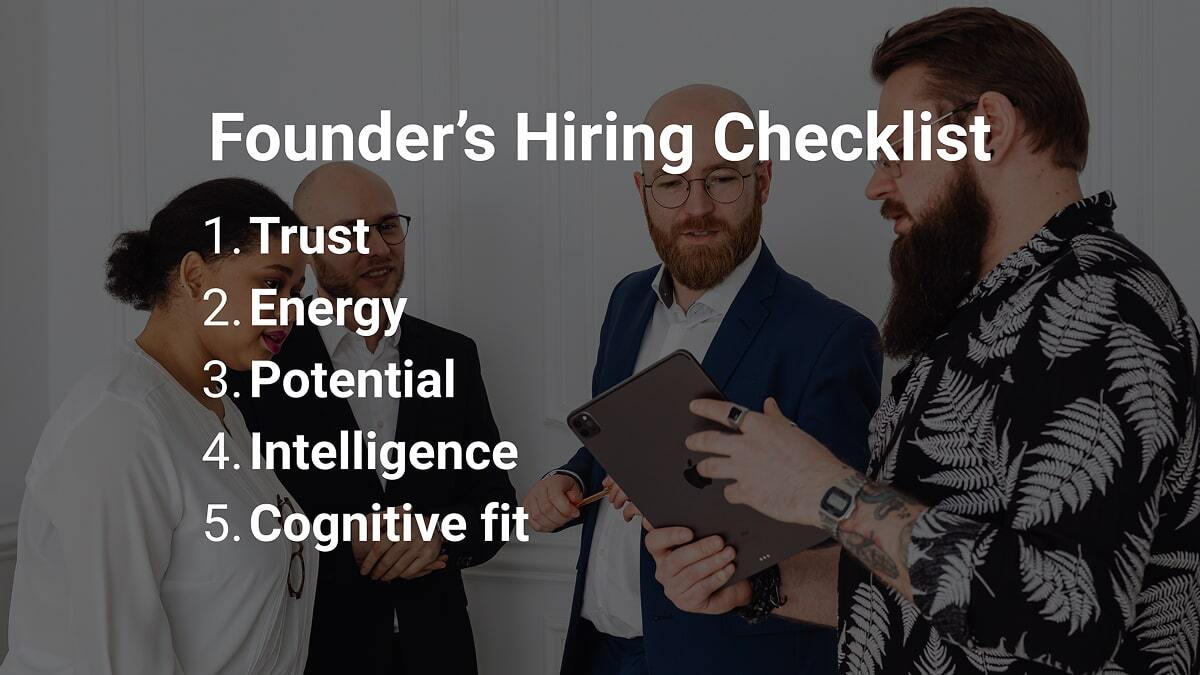
During interviews I ask myself the following questions: Do I like this person? Do I trust them? Do I see potential? Do they have enough energy to move actively? Do they have enough erudition to solve non-typical tasks?
To assess hard skills, I bring in professional acquaintances if we don’t yet have that expertise inside the company.
I am cautious about people who know how to speak beautifully and present themselves brightly. This is not a rule, but often they work poorly because they rely on good communication skills.
Always talk to previous employers. I once had a case where a person had not worked at all at the previous job listed on the resume. And there was another case when I ignored this rule, later began to understand that I had made a mistake, decided to check with the previous employer, and heard a lot of interesting things in response.
Invest time in proper onboarding.
During the work process, I listen to subtle signals. How comfortable do I feel with this person, how well do they understand my thoughts, how much are we on the same wavelength?
Talk through things that bother you. Even small ones. Do regular 1-on-1s and performance reviews.
There is always a choice: to spend energy on internal discussions within the team or to invest it in clients, products, efficient processes, etc. Where the result lies is obvious. I think the conclusion is also obvious.
Sometimes the company outgrows people’s qualifications. You have to form a new team. But more often, they themselves no longer feel comfortable and leave. “I joined when we were on the same level, and now so much bureaucracy…” The opposite happens too. This is normal, and you need to treat it calmly.
Hire slowly, fire unsuitable people quickly.
Parting with people is difficult; no one likes it. What helps here is asking yourself what is more important to you – to avoid discomfort or to achieve results. The interesting thing is that for people, too, changes most often turn out for the best.
During separation, a useful tool is an exit interview. You learn a lot about yourself and the company. And some pleasant things too.

And finally, I will recommend a good book on hiring methodology – “Who: The A Method for Hiring.”